IoT
Product Design
Physical UX
Designing a holographic fireplace experience under real-world constraints
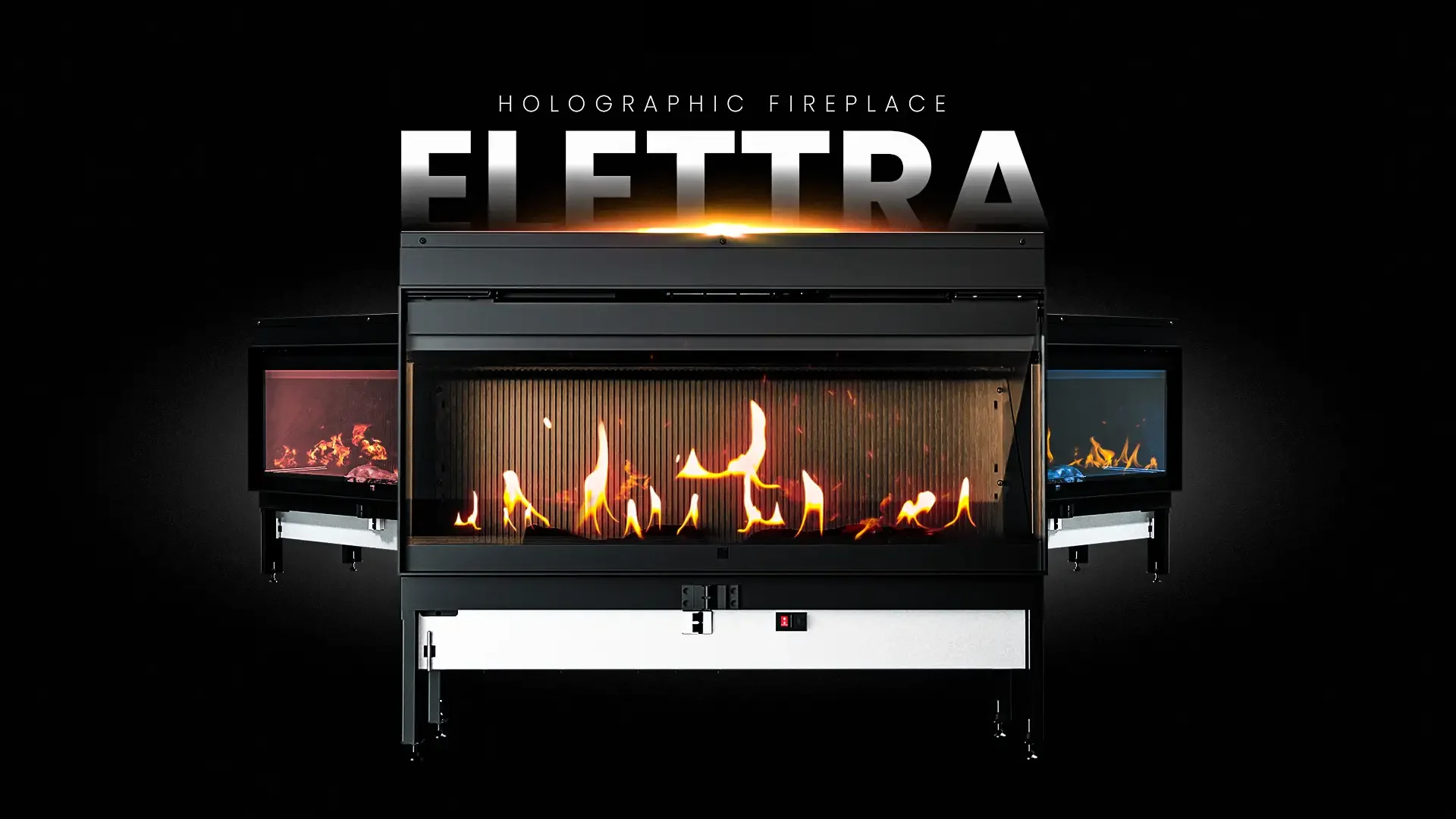
A holographic fireplace system combining industrial design, embedded engineering and digital simulation to create a photorealistic fire illusion on low-power hardware.
Deployed at Progetto Fuoco 2025 (Verona) · 100% uptime during live demo · Commercial launch planned for Q2 2026

Context & The "Why"
Electric fireplaces often fail because they either look artificial or require high-end hardware that makes the product too expensive for the consumer.
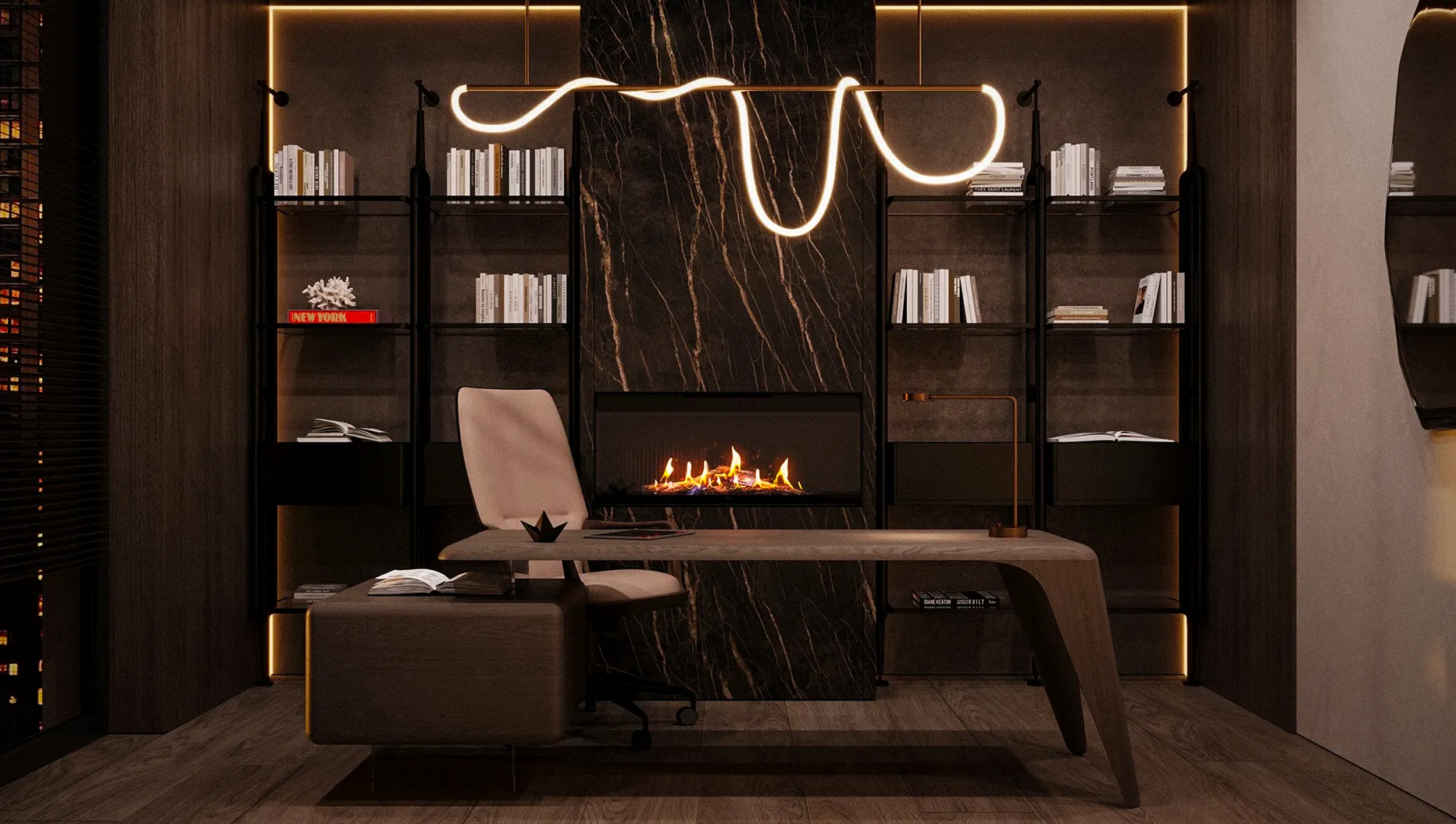
My goal was to answer one core question:
Defining the Audience: From Stakeholder Vision to Market Reality
Together with the core team and the primary stakeholder, I facilitated a workshop to transition from a broad concept to specific user archetypes.
Through these strategic consultations, we identified two primary pillars for Holo Elettra:
Target: High-end hotels, restaurants, and luxury wellness centers or executive lounges.
The Need: These venues require the premium ambiance of a fireplace but are often restricted by strict fire safety regulations, high maintenance costs, or ventilation issues. Holo Elettra provides the "atmosphere" as a service, with zero risk.
Target: Private homeowners who value aesthetics and interior design over traditional heating.
The Need: Users who want the psychological comfort and visual ritual of a fire but lack the time or desire for the maintenance (cleaning ash, sourcing wood, annual inspections) associated with real fireplaces.
Strategic Insight: By defining these groups early, we realized that Holo Elettra isn't a "heater", it is an atmospheric asset. This shifted our focus from thermal engineering to maximizing visual fidelity and effortless "plug-and-play" interaction.
Core Strategy: "Furniture Over Screen"
The most critical decision was defining the product’s paradigm: a fireplace is furniture, not a computer. It shouldn't crash, it shouldn't feel like an interface, and it shouldn't demand constant attention.
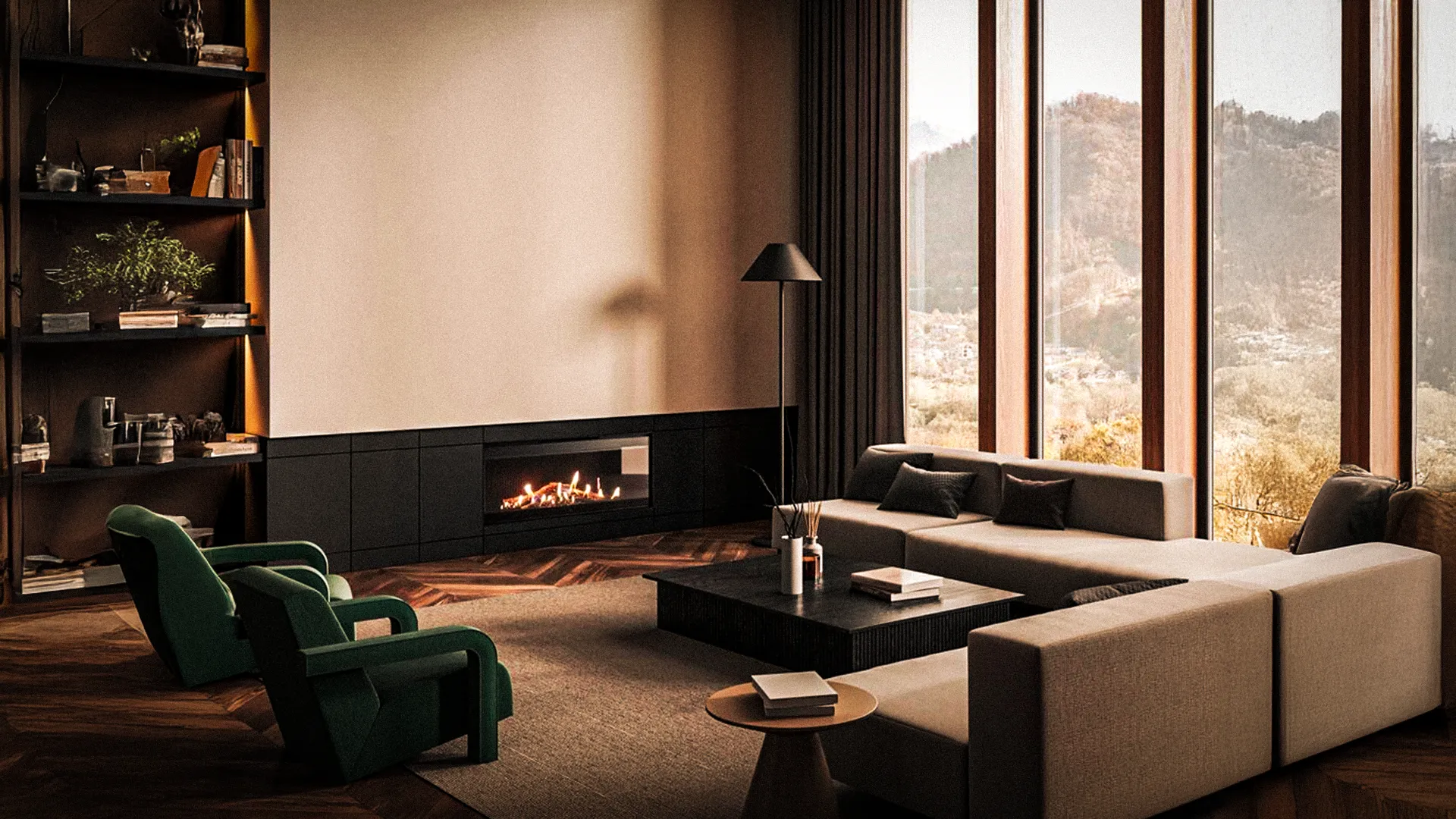
Passive Interaction: The product should blend into the environment. Interaction is optional, not required.
Perception over Simulation: Instead of simulating perfect physics (which would kill the CPU), I focused on the psychology of flame motion and perceived depth.
Control Separation: The fireplace display is for immersion; complex controls are moved to external devices.
Onboarding Strategy: "Offloading Complexity"
Most IoT devices fail during the initial Wi-Fi setup (e.g., typing a password using a remote control is a nightmare). To preserve the premium feel, I collaborated closely with the Mobile UX/UI Designer to develop an Asynchronous Onboarding Flow.
The smartphone handles the complex input (Wi-Fi credentials, account setup). We used a QR code on the fireplace as the first touchpoint to force the app download.
During setup, the Elettra screen shows only elegant, minimalist status updates ("Awaiting Connection," "Ready").
Technical errors appear on the phone, not the fireplace. This prevents "computer-like" messages from breaking the holographic illusion.
Result: Achieved a median setup time of 2:17 minutes, significantly reducing initial friction (validated via usability testing, n=10).
Visual Library & Ambient Immersion
To elevate the illusion from a flat 2D projection to a volumetric 3D hologram, I developed a specific visual construction method based on stratification. The pre-rendered flame archetypes are structured into six distinct height layers (as visualized by the color guide in the image).
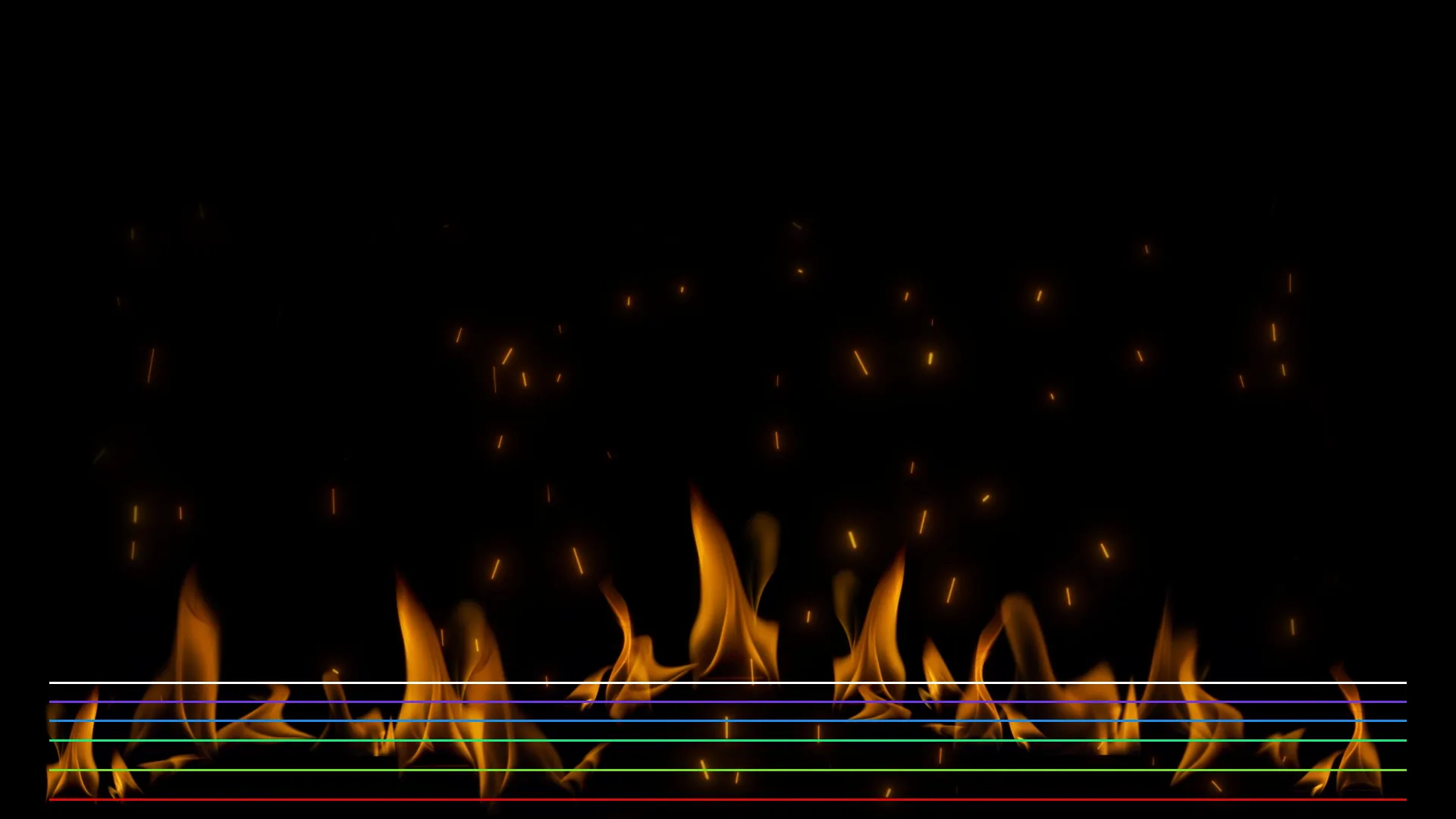
By controlling the vertical composition, I could optimize how the light reflected from the glass, creating a realistic, deep perception of a volumetric fire without requiring complex real-time rendering.
Each flame archetype was custom-configured to map its layer heights to the predefined, physical log arrangement. This precise mapping prevents a "floating video" effect and anchors the digital fire to the physical world.
Immersion in Holo Elettra is a symbiosis of video and physical light. To prevent a "flat screen" look, I designed a dedicated dynamic lighting system and a curated visual library.
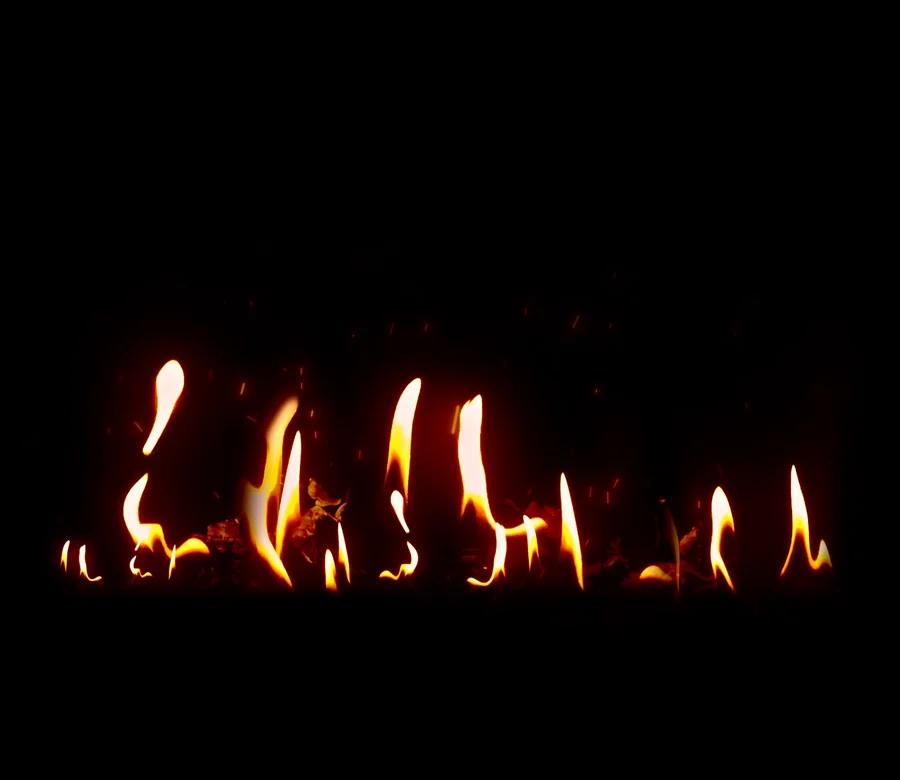
Visual Library: A set of three flame archetypes (Bio-Ethanol, Rustic Campfire, Traditional Hearth) with 5-stage intensity control to match any interior mood.
Bio-Ethanol
Sleek, minimalist flame geometry tailored for modern spaces and architectural precision
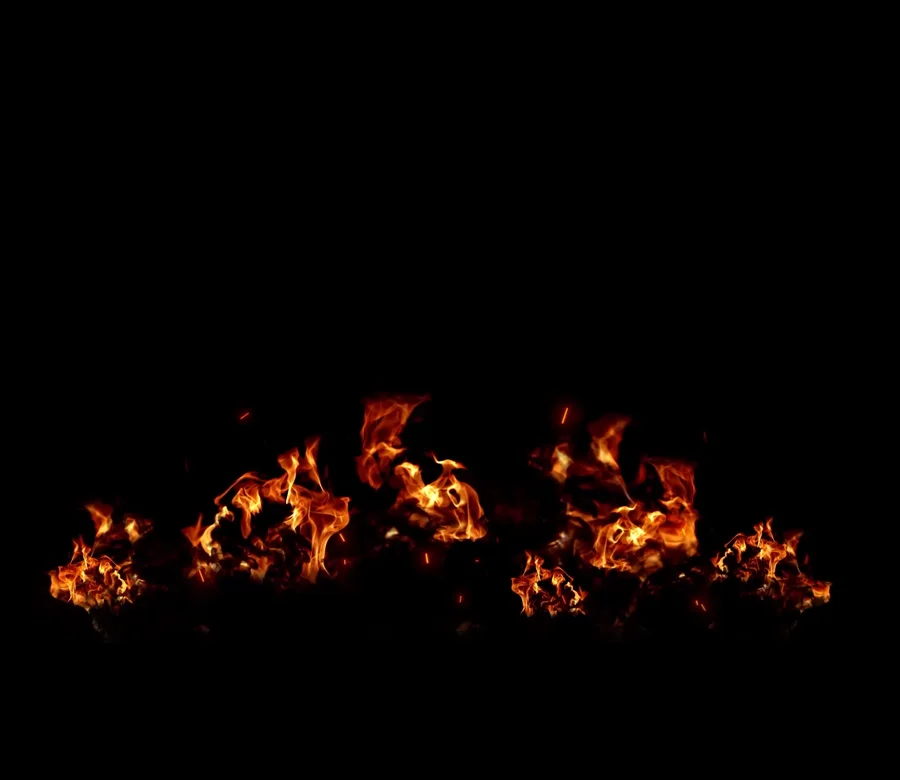
Rustic Campfire
A lively, erratic visualization capturing the raw, untamed energy of an outdoor bonfire.
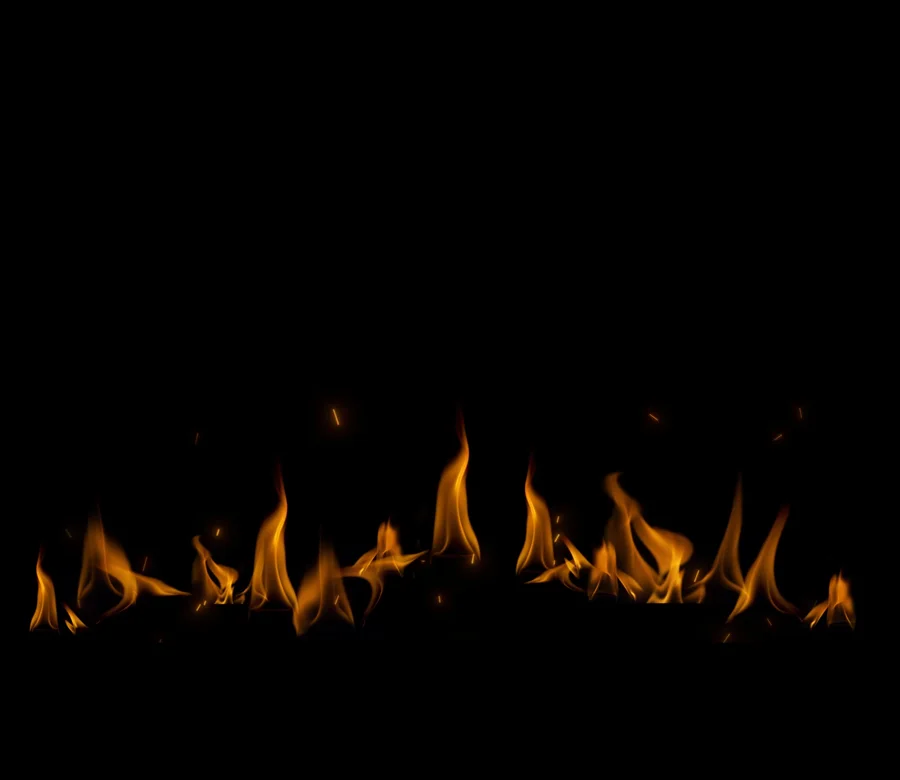
Traditional Hearth
Rich, authentic wood-burning simulation designed for traditional warmth and comfort.
Replaced uniform LED strips with center-weighted "heat core" lighting. This creates a natural, intense glow that spills beyond the holographic flame.
A key innovation where top-down lights pulse in 5-second cycles, synchronized with the flame loops. This creates dynamic shadows and prevents a static, artificial look.
Four dedicated color presets (Red, Orange, Purple, Blue) allow the device to transition from a classic hearth to a contemporary architectural accent.
Red
Orange
Purple
Blue
Visual Engineering: Overcoming Hardware Limits
The Raspberry Pi lacked a dedicated GPU, and real-time fluid simulation caused immediate thermal throttling. I had to architect a "Zero-Overhead" rendering strategy.
H.265 (MP4), 60fps, 1-min loops
H.265 (MP4), 60fps, 1-min loops
MKV, 30fps
Outcome: Stable playback with 0% risk of crashing, while maintaining the visual variety required for a realistic fire.
Log Composition: The Logistics of Realism
For the holographic flame to look natural, the physical layer (the logs) had to be perfectly synchronized with the digital illusion. This was a purely engineering-driven process rather than a purely aesthetic one.
Halfway through the project, the engineers changed the interior paint of the fireplace. This altered light absorption and reflection, which destroyed the holographic depth. I had to completely re-evaluate the spatial composition of the logs to adapt to the new optical properties of the device.
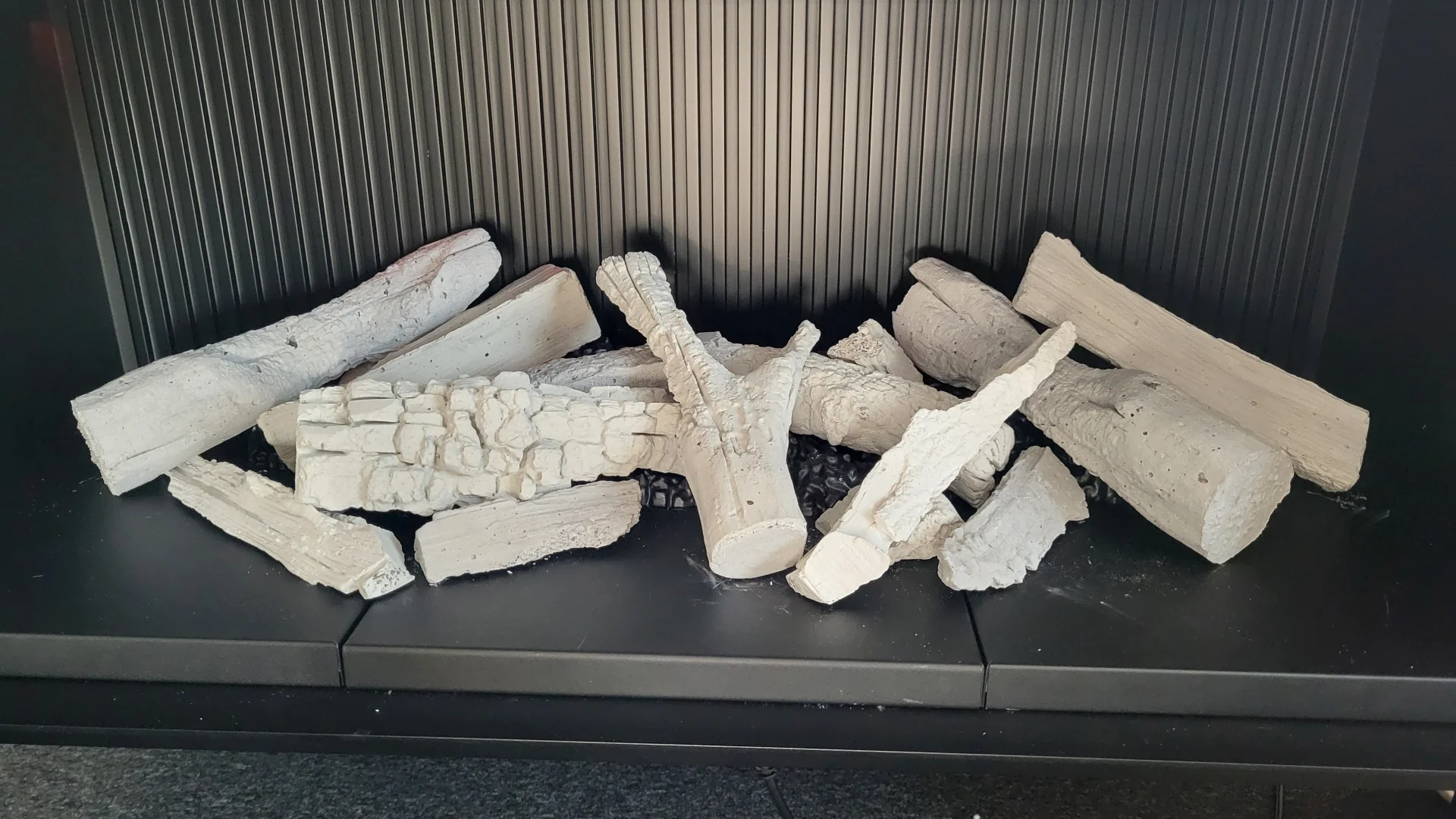
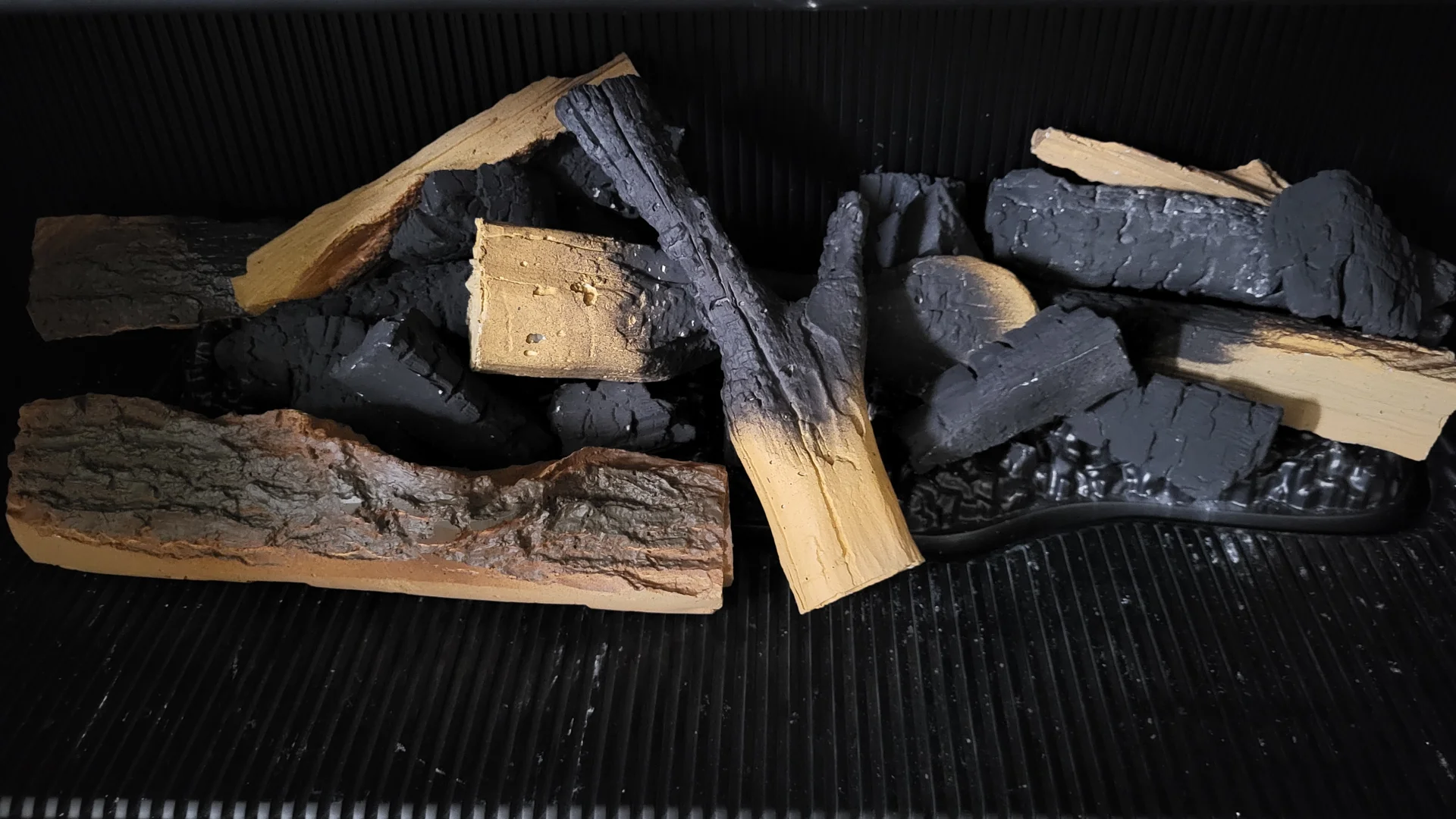
Iterative Testing: I conducted a series of layout tests for the ceramic logs, mapping their positions (see points 1-7). The goal was to ensure the virtual flames "poured" from natural gaps in the structure rather than from empty space.
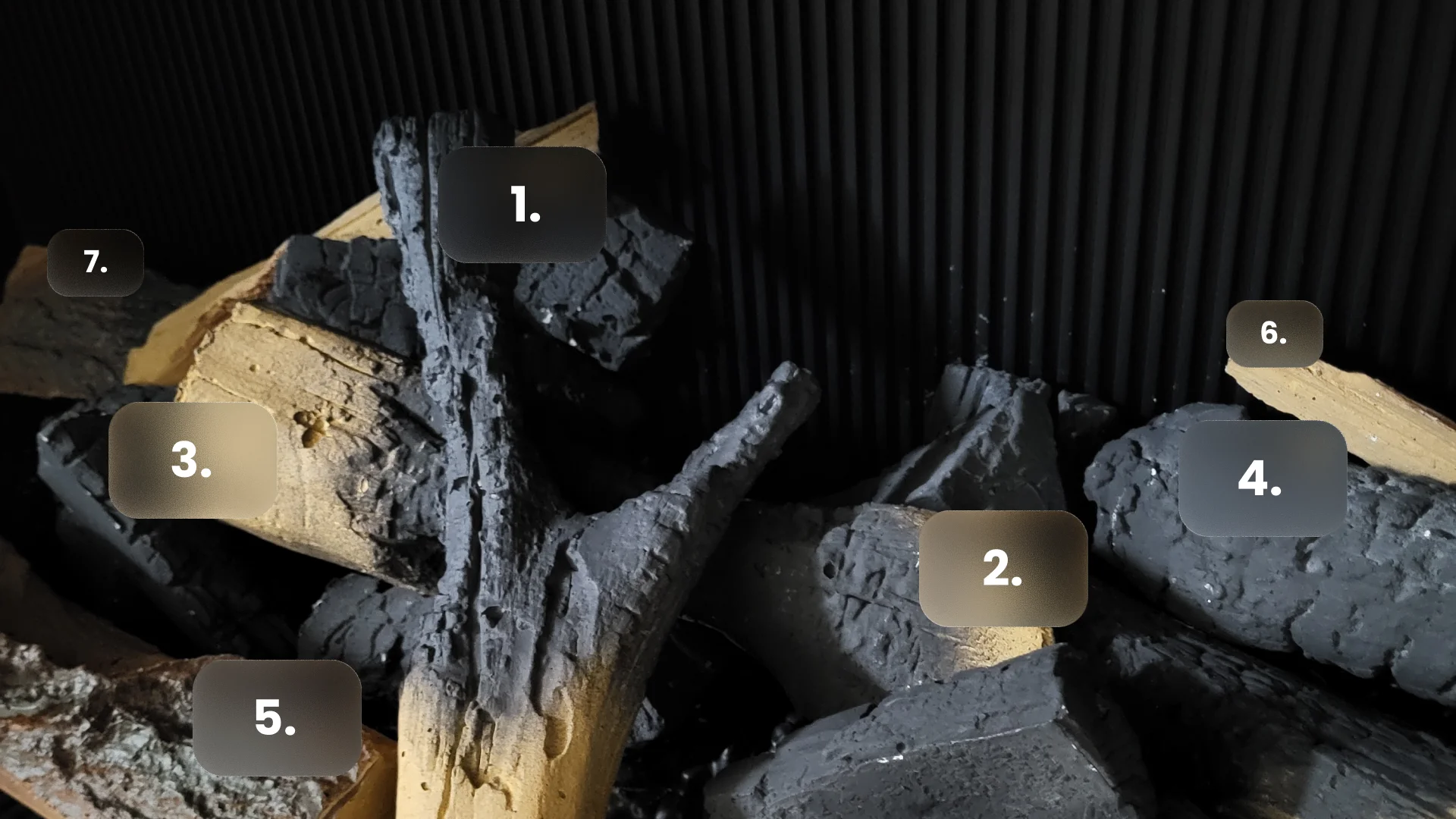
Product Insight: In IoT, design doesn't end at the screen. The physical structure of the product is an integral part of the user interface.
Physical UX: Mirrors and "Zoned Architecture"
Designing for a holographic reflection required a unique approach to UI:
Holo Elettra uses the "Pepper’s Ghost" optical illusion to bridge the gap between industrial design and digital simulation.
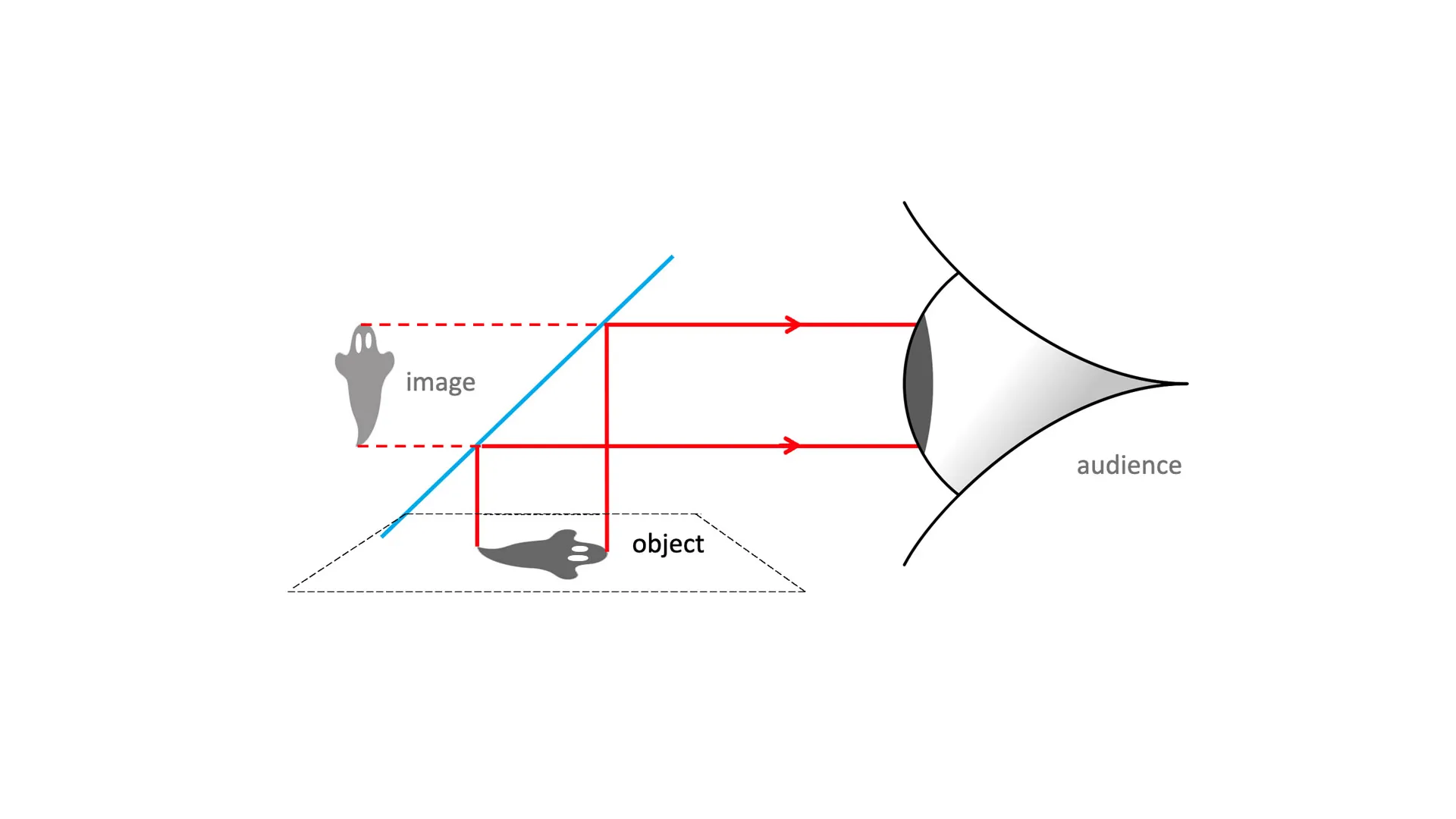
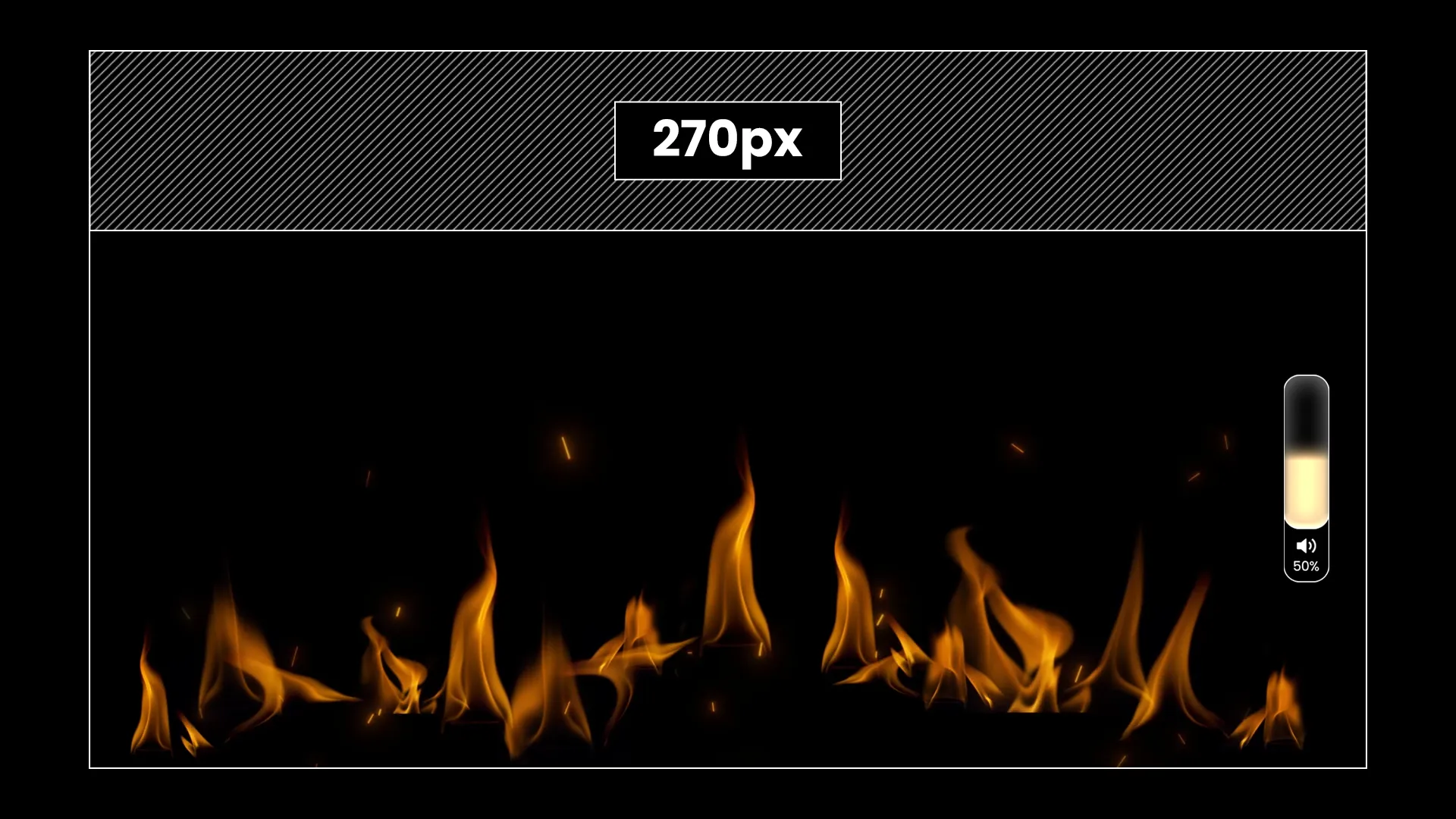
The Dead Zone: The top 270px of the screen was physically blocked by the device housing. I bypassed top-bar navigation entirely, utilizing Smart TV-style right-side menus.
Mirror Logic: All UI assets had to be designed in reverse (mirrored) to appear correctly in the reflective glass.
Remote Control vs. App Hierarchy
While the mobile app serves as the hub for advanced configuration, the physical remote remains the primary touchpoint for daily use. To maintain the "furniture-first" experience, I collaborated with the UX/UI Mobile Designer & Developer to establish a system where the remote’s tactile input is prioritized; for example, volume adjustments on the remote are instantly mirrored in the app UI to ensure real-time, cross-platform state consistency.
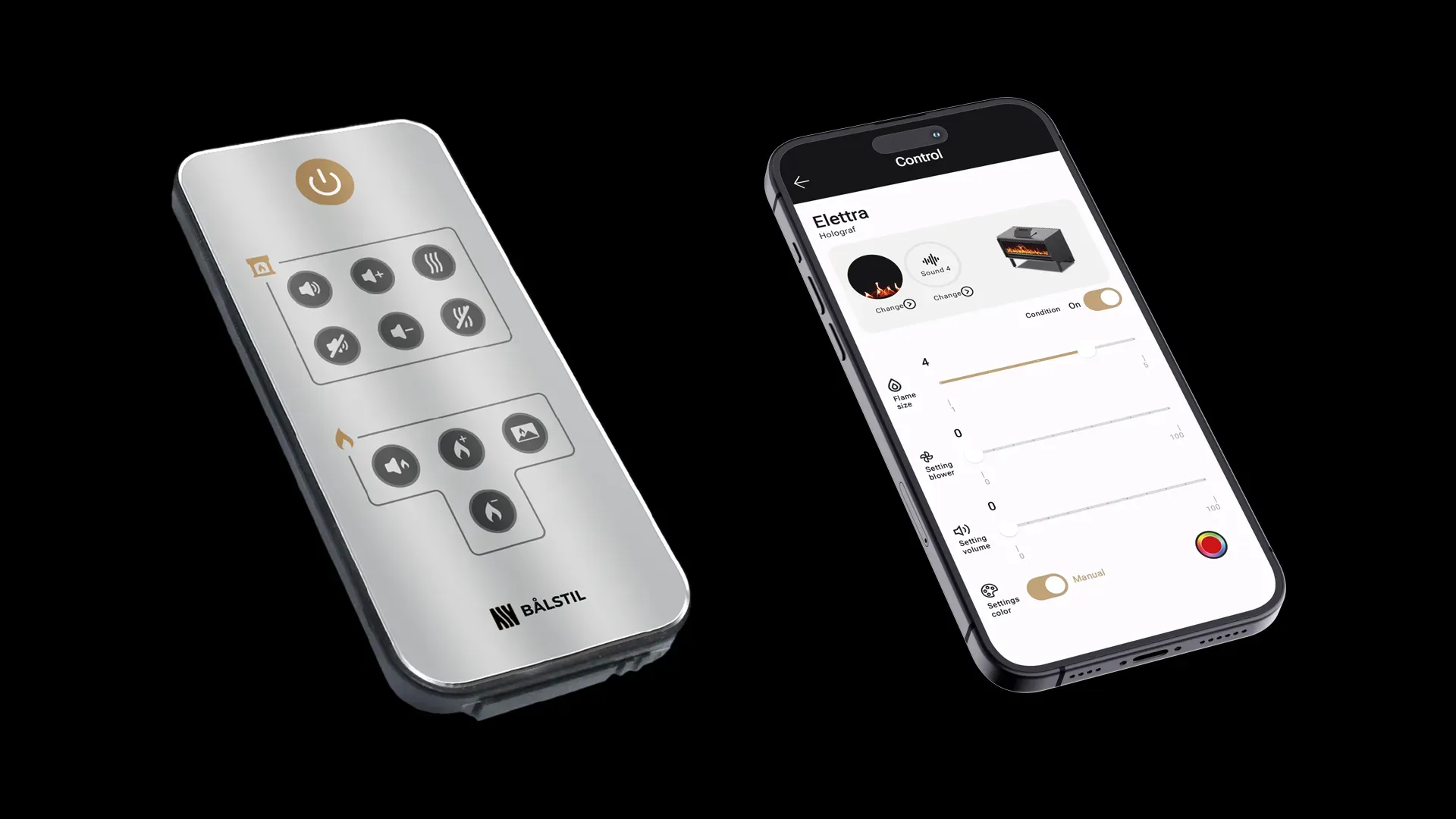
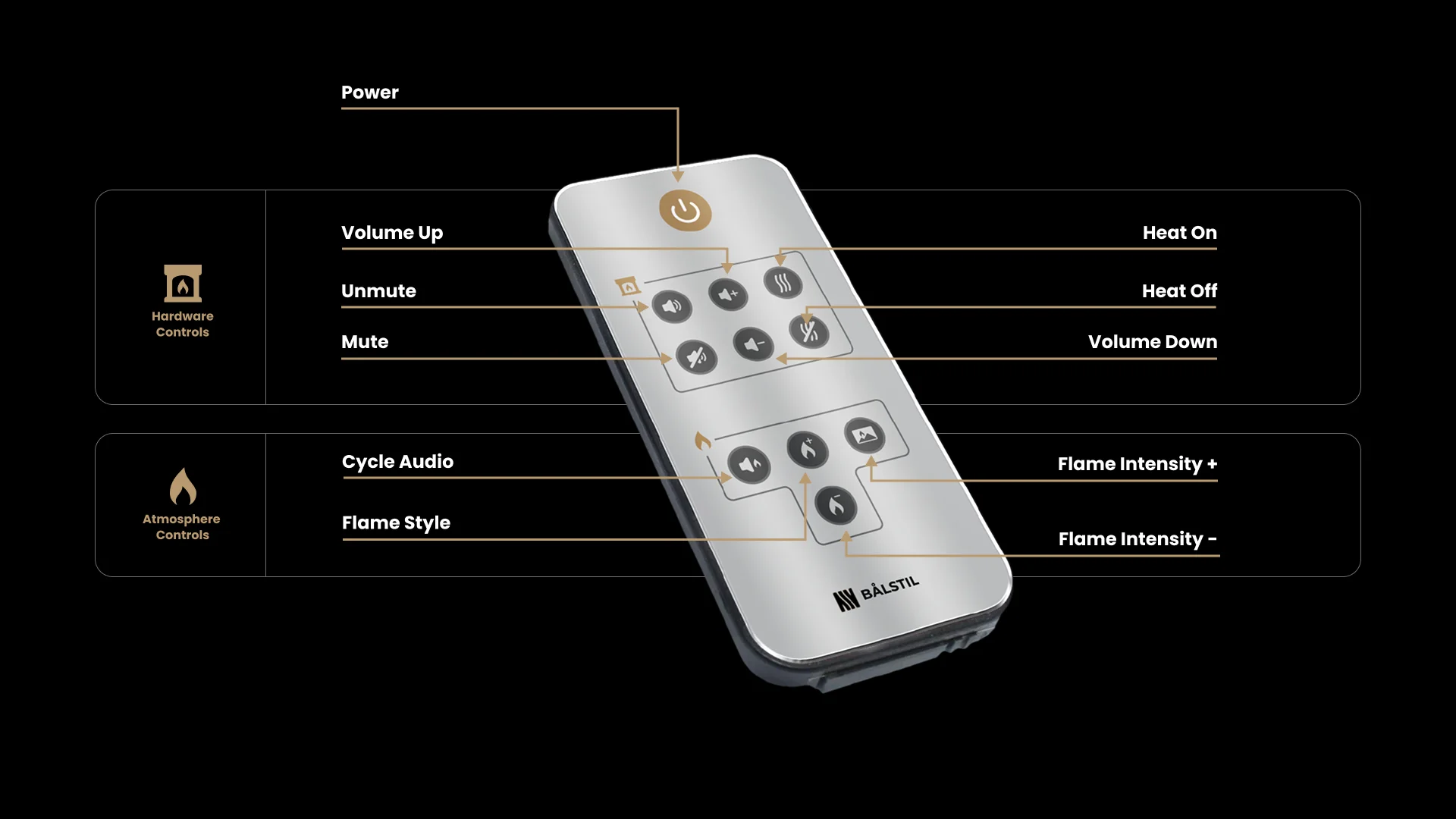
I redesigned the remote layout into a "Zoned Architecture", Separated "Utility" functions (Volume, Heat) from "Mood" functions (Flame Intensity, Flame Style).
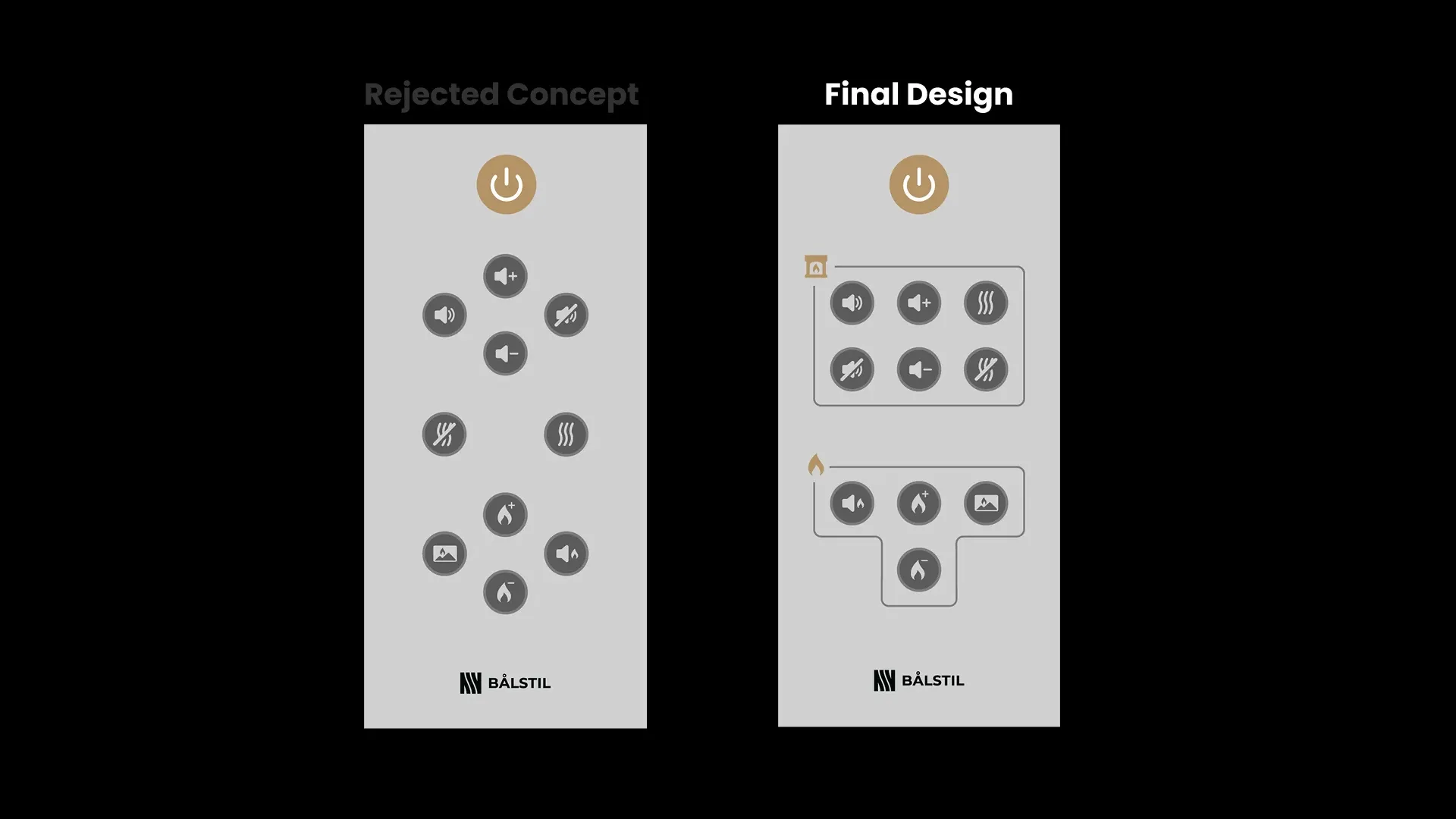
To align with the product’s physical architecture and the goal of minimal complexity, I optimized the remote by reducing button density to its functional essentials:
We moved complex, secondary features—such as aesthetic color presets—exclusively to the mobile app.
I replaced multi-level heat settings on the remote with a simplified binary (On/Off) state.
By stripping away technical clutter from the hardware, I ensured that the physical interface remains focused on the product's core purpose: the authentic, undisturbed imitation of a real fire.
Impact & Final Results
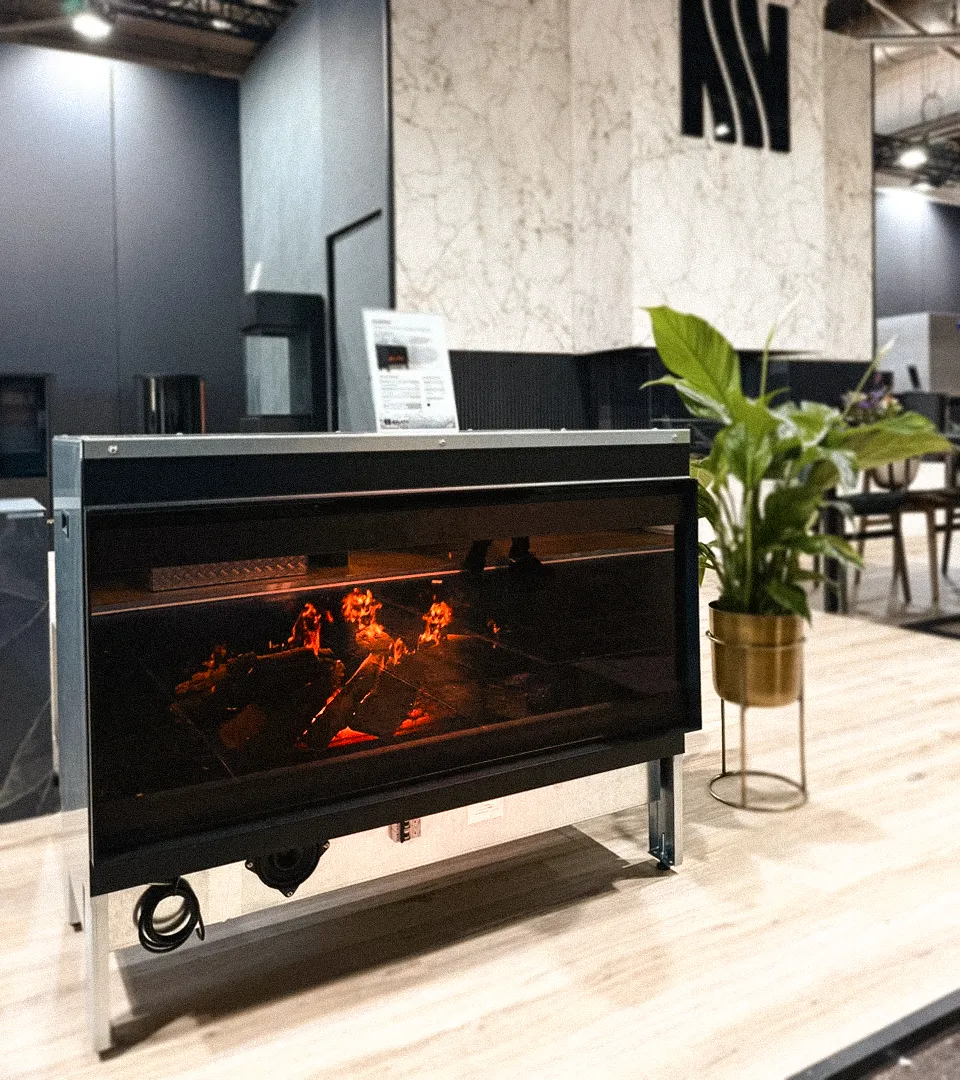
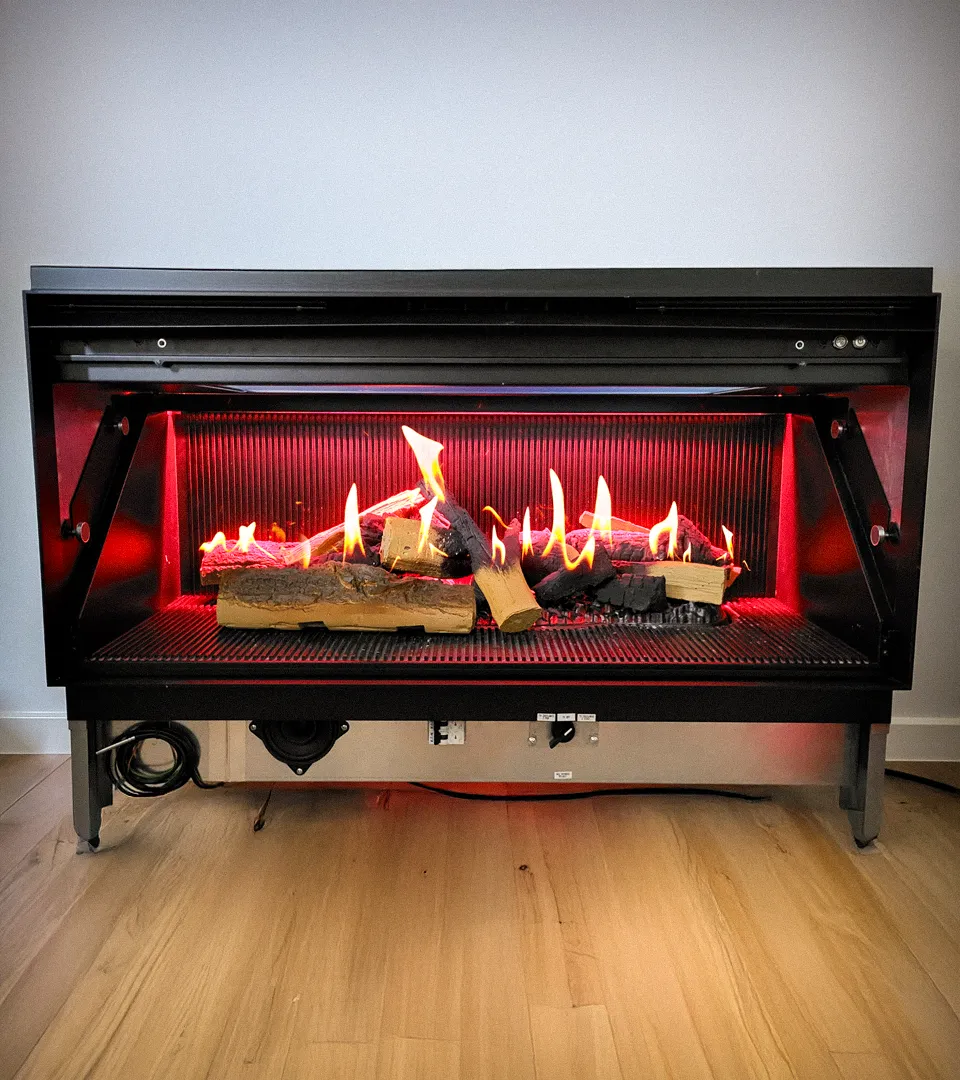
Successfully debuted with 100% system uptime during a high-stress live trade show environment.
The system architecture is fully validated and ready for a global commercial rollout in Q2 2026.